


Military Books
Books on the Pacific War
Newspaper Articles on First River Run of 282, and its first accident. Pittsburgh Press, Thursday, October 28, 1943
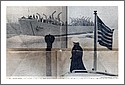
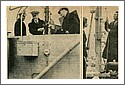
Crash Landing On River Bank Provides Thrill
Preview of Invasion Given Visitors by Accident Aboard 'LST 282'
By DALE McFEATTERSAn unexpected preview of an invasion landing on enemy beaches was experienced by crews and passengers aboard a big landing ship for tanks yesterday when a jammed steering gear swerved it into the bank of the Ohio River near Aliquippa.
Startled officers and guests on the metal decks of LST 282, ploughing upstream on her trial run, saw the broad, blunt bow swing to the right and head for shore.
Ahead loomed a 40 to 50-foot concrete retaining wall. Smoke and flames from a steel mill surmounting it lent a warlike atmosphere.
While the engines quickly were reversed, the ship had enough way to carry it forward.
Captains Are Calm
But calm reigned in the wheel house where two veteran rivermen, Capts. George Griffith and R. J. (line missing) the rudder, Capt, Hiernaux remarked:
"By rights there should be a mud bank extending out from that retaining wall that should stop us without trouble. "Sure enough, as the LST nosed to within a few feet of the wall, the bow settled squishily in an underwater mud bar and the ship softly came to rest.
The pilot switched the steering gear to an emergency control, stepped up the reverse power and backed the ship away. Within a few minutes, LST 282 was en route up the river again, her dignity ruffled a bit, perhaps, but otherwise undamaged.
An insignificant sort of thing caused this thrill on her maiden run. A bit of paint had splashed on the switch box of an electric rudder control, some of it dropping on a fuse connection.
The paint grew hot, burned out a fuse and automatically threw the rudder out of control. Once the cause was discovered, some cleaning up and a replacement fuse corrected the situation.
Cheered By Workers
More than three hours previously, the Navy's newest "ugly duckling" pulled away from the Ambridge shipyards of the American Bridge Co. for a trial run preparatory to joining America's invasion fleets overseas.
Aboard her were ferry officers who within a few days will take LST 282 down the Mississippi to New Orleans, the combat officers who will take her to the open sea and hostile shores, and a party of newspapermen.
Behind here were the cheers and hand-waving of more than 10,000 workers of American Bridge and their wives, sons and daughters, and the praise of Rear Admiral Charles L. Brand, chief of the shipbuilding division, Navy Bureau of Ships.
Saved Many Lives
Also behind at the shipyards were a newly launched sister ship, LST 286, the just-laid keel of another tank-landing-ship and the hulls and superstructures of many more in various stages of construction.
This scene was the highlight of Pittsburgh's observance of Navy Day.
A Utilitarian Job
Echoing in the ears of the combat officers, whose responsibility LST 282 is about to become, was Admiral Brand's statement that the ungraceful but deadly LST's already had saved the lives of 20,000 to 25,000 American fighting men.
Speaking at a Navy Day celebration at the American Bridge shipyards, Admiral Brand related that nearly 100 of the husky gray craft had carried soldiers, tanks, guns and motorized equipment to the shores of Sicily -- and only a very few were lost to bombs and torpedoes.
As LST 282 glided past Ambridge and the old settlement of Economy in the misty afternoon, the combat officers eagerly explored the decks and quarters that will be their home for months to come.
A grim, efficient sight met their exploring eyes. The LST is built for on purpose -- to launch on enemy beaches as many tanks, guns and crews as she will carry. She is strictly a utilitarian job.
Quarters in Stern
The sides of her decks are lined with davits to hold and lower smaller landing craft and assault boats. The deck amidships is clear to carry additional equipment.
The stern is layered and packed with wheel house, officers' quarters, crew's quarters, galley, engine room, store rooms, ammunition room and gun platforms.
Below deck, resembling a long, narrow gymnasium and running almost the length of the ship, is a steel walled and floored tunnel where tanks are store, facing the bow.
No Space is Wasted
Forward, to discharge tanks and crews to combat, are a ramp that lowers and heavy doors that swing out from the bow.
No space is wasted. Officers sleep two and four to a small cabin containing minimum essentials -- mirror, locker, clothes rack. The crew sleeps in hammocks.
The trail run was under the supervision of J. P. D. Gerrese, general superintendent of outfitting. Pilotage was under the charge of Capt. Griffith, commodore of the river fleet of the Carnegie-Illinois Steel Corp. Capt. Hiernaux was at the wheel.
Speeds Are Tested
As LST 282 swept past Aliquippa, Baden, Freedom, Monaca, her various speeds were tested -- one-third, two-thirds, full speed.
Near Beaver, opposite the new synthetic rubber plant at Kobuta, speed was reduced and her stern anchor was dropped. With the ship moving ahead, the anchor winch was started, the vessel halted, and as the anchor rope was stretched taut, slowly moved back.
This is a way an LST moves from shore after launching its tanks. The stern anchor is dropped before she hits a beach. Then the winch and the anchor rope pull the ship back from the shore.
The vessel turned around at Kobuta and headed upstream for one of its more severe tests -- a "crash" stop. The engines suddenly were reversed from full speed ahead to full speed astern.
No Jar Or Jolt
There was no jar or jolt, but the ship came to a dead stop in short order.
Coming through its tests with flying colors, LST 282 was accorded the traditional "clean sweep" ceremony. A broom, its handle painted red, white and blue, was hoisted to the mast head.
A final demonstration was given when the vessel returned to the Ambridge dock. the massive "barn doors" in the bow were opened, the ramp rumbled down and all that was needed to complete the picture was a parade of tanks rolling out.
Also speaking at the shipyard ceremonies was L. A. Paddock, president of American Bridge. Mrs. Lois Ethel Leseman, a welder at the shipyard, sponsored the launching of the LST 282. Music was provided by the Ambridge High School Band.
If anyone has a diary, story, or remembrance of any of the shipmates of the 282 that they would like to share we would love to make a spot here for them. Please contact us
Landingship.com © 2005-2026 Site by Dropbears